
Wenzl’s Collision Center has published new consumer guidance explaining why wheel alignment can change after a collision and how alignment-related conditions can connect with damage to suspension, steering, wheels, and nearby mounting areas. The September resource is intended to help drivers understand why an alignment concern following an accident may require more evaluation than a routine adjustment.
Wheel alignment describes the geometric relationship between a vehicle’s wheels, suspension, and roadway. These relationships are established within specifications for the individual vehicle. When collision forces affect a wheel or components responsible for maintaining its position, alignment measurements can change even when exterior damage appears relatively limited.
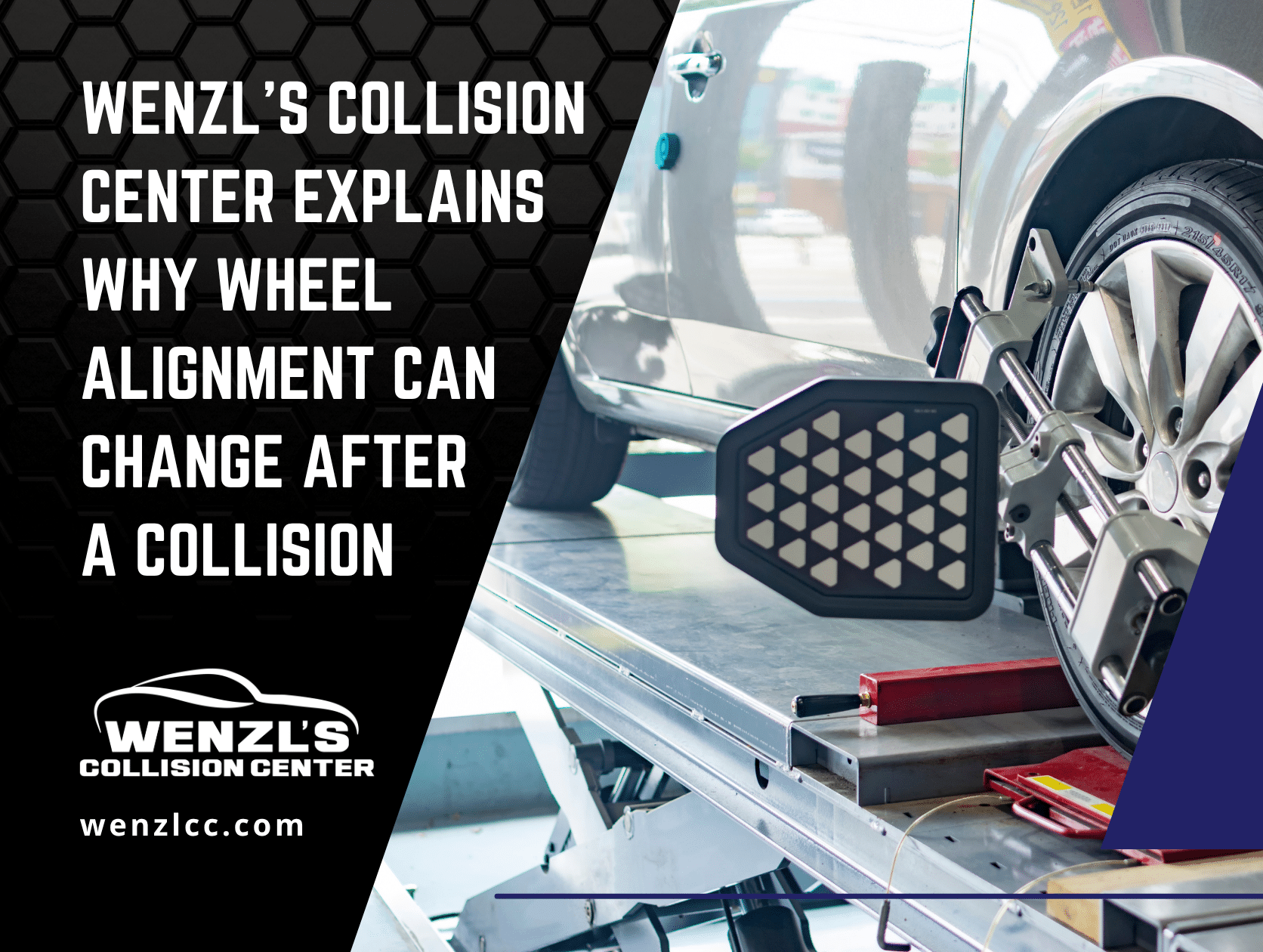
The new guidance expands on Wenzl’s Collision Center’s collision repair information by focusing specifically on the relationship between collision damage and wheel alignment.
Wheel-area impacts are one situation in which alignment can become relevant during repair planning. A collision involving a front or rear wheel can direct force toward the suspension and steering components connected to that wheel. Impacts involving nearby body areas can also make these components relevant depending on the location and direction of the collision.
Visible wheel damage is not required for alignment to become part of the evaluation. At the same time, damage to a tire, wheel, fender, or wheel opening does not automatically establish that the vehicle is out of alignment. Inspection and measurement provide more useful information about the actual condition of the vehicle.
Suspension components play an important role because they help establish and control wheel position. Depending on vehicle design, components such as control arms, struts, links, knuckles, and their mounting locations can influence alignment measurements.
If a collision physically affects one of these components, performing an alignment adjustment alone may not address the underlying condition. The affected component or mounting area may first need to be evaluated and addressed according to the documented repair plan.
Steering components can also become relevant, particularly following an impact near a front wheel. Changes in steering behavior after an accident can provide information that supports further evaluation, but a symptom alone does not identify the specific cause.
For example, a steering wheel that appears differently positioned during straight travel can be associated with alignment-related conditions, but technicians still need to evaluate the vehicle rather than assuming a particular component has been damaged.
This distinction separates routine alignment service from collision-related alignment evaluation. Normal driving conditions, tire wear, road impacts, and other factors can influence alignment over time. After an accident, technicians also consider whether collision damage has affected components responsible for maintaining the specified wheel geometry.
Exterior body damage can provide additional context. Damage around a fender, quarter panel, rocker area, or wheel opening may occur near suspension and structural mounting locations. Wenzl’s provides additional information about evaluating and restoring damaged exterior components through its auto body repair information.
The appearance of these exterior panels does not determine whether the suspension or alignment has changed. Instead, the location of the collision helps identify which adjoining areas may be appropriate to inspect.
Structural mounting areas can also matter because suspension components connect to specific points on the vehicle. When an impact is significant enough to make those locations relevant, technicians may use inspection and measurement to document their condition.
This does not mean an alignment change automatically indicates structural damage. Alignment, suspension condition, and structural condition are related considerations that can be evaluated separately according to the findings from the individual vehicle.
Tire wear is another reason drivers may become aware of an alignment concern, although wear patterns typically develop over time rather than immediately revealing the full effects of a collision. Existing tire condition can also influence what a driver notices after an accident.
For collision repair planning, measurements provide more direct information than relying on tire appearance alone. Alignment equipment can document wheel geometry and help determine whether measured values correspond with the vehicle’s applicable specifications.
Vehicle-specific information is important because alignment specifications and suspension designs vary among makes, models, model years, and configurations. A measurement appropriate for one vehicle cannot automatically be applied to another.
Manufacturer repair information may also identify inspections, component replacement requirements, alignment procedures, or related operations that apply when particular suspension or steering components have been involved in a collision.
For Lincoln drivers, the September guidance provides context for why wheel alignment may appear on collision repair documentation even when the most noticeable damage is concentrated elsewhere around the vehicle. More information about Wenzl’s local repair services is available through the Wenzl’s Collision Center Lincoln location.
The resource also clarifies that alignment should be considered within the sequence of the overall repair. When damaged suspension, steering, wheel, or related components are identified, those conditions may need to be addressed before final alignment measurements or adjustments are completed.
This sequence helps ensure that alignment results reflect the vehicle after applicable collision repairs have been performed rather than attempting to compensate for a component that remains physically damaged.
The central takeaway is that a change in wheel alignment after an accident can be connected to more than the wheels themselves. Suspension components, steering parts, mounting locations, and the characteristics of the collision can all contribute to the evaluation. Inspection and measurement allow the repair plan to be based on the vehicle’s documented condition rather than exterior appearance or symptoms alone.
Wenzl’s Collision Center is a family-owned collision repair business serving Lincoln, Nebraska. Located at 4515 N 62nd St, Lincoln, NE, the facility provides collision repair, auto body repair, paintless dent repair, and related vehicle restoration services for drivers in Lincoln and surrounding communities.
###
For more information about Wenzl’s Collision Center, contact the company here:
Wenzl’s Collision Center
Kelli & Martin Wenzl
(402) 466 0821
kwenzl@wenzlcc.com
4515 N 62nd St, Lincoln, NE 68507